
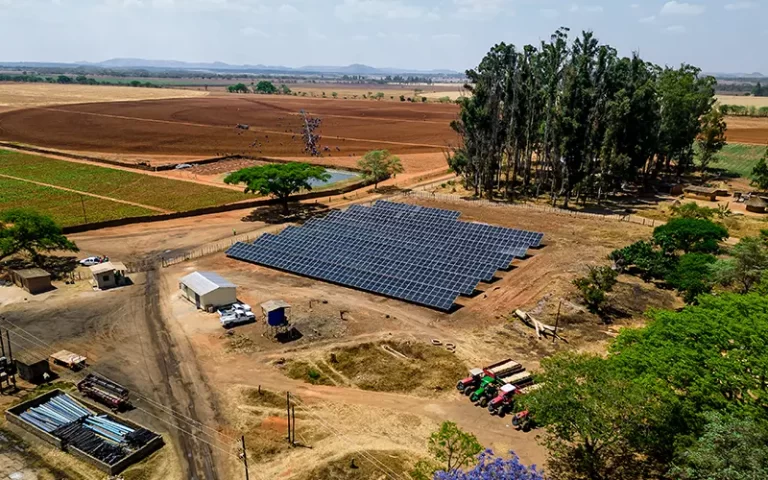
Introduction: The Energy Shift in Commercial Farming
Commercial agriculture in Zimbabwe is energy-intensive. From irrigation and cold storage to processing and packaging, modern farms depend heavily on reliable electricity. Yet persistent grid instability, rising electricity tariffs, and volatile diesel prices have made energy one of the biggest operational risks facing commercial farmers.
Solar power is no longer a backup solution, it is becoming a primary energy strategy for progressive commercial farms.
Across Zimbabwe, farmers are discovering that solar installations do more than reduce outages. They lower operating costs, improve productivity, increase resilience, and enhance sustainability credentials in both local and export markets.
This article explores how solar power is transforming commercial agriculture and why the shift is accelerating.
The Energy Challenge Facing Commercial Farms
Commercial farms operate on tight margins. Energy disruptions directly impact:
- Irrigation cycles
- Crop yields
- Livestock welfare
- Cold chain preservation
- Processing schedules
- Worker accommodation and farm infrastructure
1. Grid Instability
Frequent power cuts interrupt irrigation, especially during peak growing seasons. Crops like tobacco, horticulture produce, maize seed, and wheat are highly sensitive to water stress.
2. Diesel Dependency
Many farms rely on diesel generators as backup power. However:
- Diesel costs fluctuate dramatically.
- Fuel logistics can be unreliable.
- Maintenance expenses accumulate quickly.
- Generators produce emissions and noise pollution.
Over time, diesel becomes significantly more expensive than renewable alternatives.
3. Rising Tariffs
Electricity tariffs continue to rise, creating unpredictability in operating budgets.
Solar offers farmers something invaluable: predictability and control.
Solar Applications in Commercial Agriculture
Modern solar systems are not one-size-fits-all. They are engineered based on a farm’s energy profile, load requirements, and seasonal patterns.
Solar-Powered Irrigation Systems
Irrigation is often the largest energy load on a farm.
Solar-powered water pumps:
- Operate during peak sunlight hours (when irrigation is often required most)
- Reduce or eliminate diesel consumption
- Can be paired with battery storage for extended operation
- Require minimal ongoing maintenance
For borehole or river abstraction systems, solar pumping is one of the fastest-return investments in agriculture.
2. Solar Cold Storage & Refrigeration
For horticulture farmers exporting flowers, berries, vegetables, or citrus, cold storage is non-negotiable.
Solar systems:
- Maintain stable temperatures
- Protect produce quality
- Reduce post-harvest losses
- Enable off-grid cold room solutions in remote areas
By stabilizing the cold chain, farms protect both revenue and reputation.
3. Solar for Livestock Operations
Livestock farms rely on:
- Water pumps
- Feed processing
- Ventilation systems
- Lighting
- Security systems
Solar energy ensures uninterrupted water supply and ventilation both critical to animal health and productivity.
4. Solar for Processing & Value Addition
Value-added agricultural operations such as milling, grading, packing, and drying require reliable electricity.
Hybrid solar systems (solar + grid + battery) provide:
- Load balancing
- Peak shaving
- Reduced demand charges
- Business continuity during outages
Financial Impact: Why Solar Makes Economic Sense
Solar installations require upfront capital, but the financial benefits are substantial.
1. Lower Operating Costs
After installation:
- Sunlight is free.
- Maintenance is minimal.
- Fuel costs are eliminated or drastically reduced.
2. Predictable Energy Costs
Unlike diesel or grid electricity, solar energy shields farmers from tariff fluctuations.
3. Strong ROI Timelines
Well-designed commercial systems typically achieve payback within:
3–5 years (depending on system size and diesel offset levels)
After that period, energy generation becomes largely cost-free for decades.
4. Asset Value Enhancement
Solar infrastructure increases farm asset value and improves long-term viability.
Environmental and Market Benefits
Global markets increasingly demand sustainable supply chains.
Solar energy:
- Reduces carbon footprint
- Enhances ESG compliance
- Supports export competitiveness
- Improves brand positioning
For export-oriented farms, sustainability is no longer optional, it’s strategic.
A Competitive Advantage, Not Just a Utility Upgrade
Forward-thinking farmers are using solar not merely to survive outages but to outperform competitors.
Reliable energy means:
- Timely irrigation
- Better yields
- Reduced crop stress
- Improved product quality
- Lower per-unit production costs
Solar power turns energy from a risk into an advantage.
Conclusion: The Future of Farming Is Solar-Powered
Solar power is transforming commercial agriculture in Zimbabwe by:
- Improving operational stability
- Reducing long-term energy costs
- Increasing productivity
- Supporting sustainability goals
For commercial farms looking to secure long-term profitability and resilience, solar energy is no longer experimental, it is essential.
Ready to explore how solar can transform your farm’s performance? Contact Purleigh Investments for a customized solar feasibility assessment today.